
Table of Contents
- 1. The Physiology of Growth: The Extreme Risk of Non-Medical Restraints
- 1.1. Catastrophic Skeletal Risk
- 1.2. The Escalation of Extreme Discipline
- 2. The “Reunification at All Costs” Systemic Bias in Family Courts
- 2.1. The Pro-Se reunification Trap
- 2.2. The Power Asymmetry
- 3. Practical Steps to Document Harm and Secure Emergency Protection
- 3.1. 1. Seek Immediate Medical Evaluation
- 3.2. 2. Meticulously Document Every Detail
- 3.3. 3. File for an Emergency Protection Order
- 4. Healing the Trauma of Broken Protection
- 5. Frequently Asked Questions
- 5.1. What should I do if my child tells me they are being physically restrained or hurt by a co-parent?
- 5.2. Can a parent face criminal charges for using a homemade restraint as discipline?
- 5.3. Why do family courts sometimes ignore a child’s complaints of abuse?
- 5.4. How can teachers or neighbors help a child trapped in an abusive household?
- 5.5. How do I help my child recover emotionally from severe domestic trauma?
Systemic Failures in Child Protection: Coercive Control and the Power Asymmetry of Family Courts
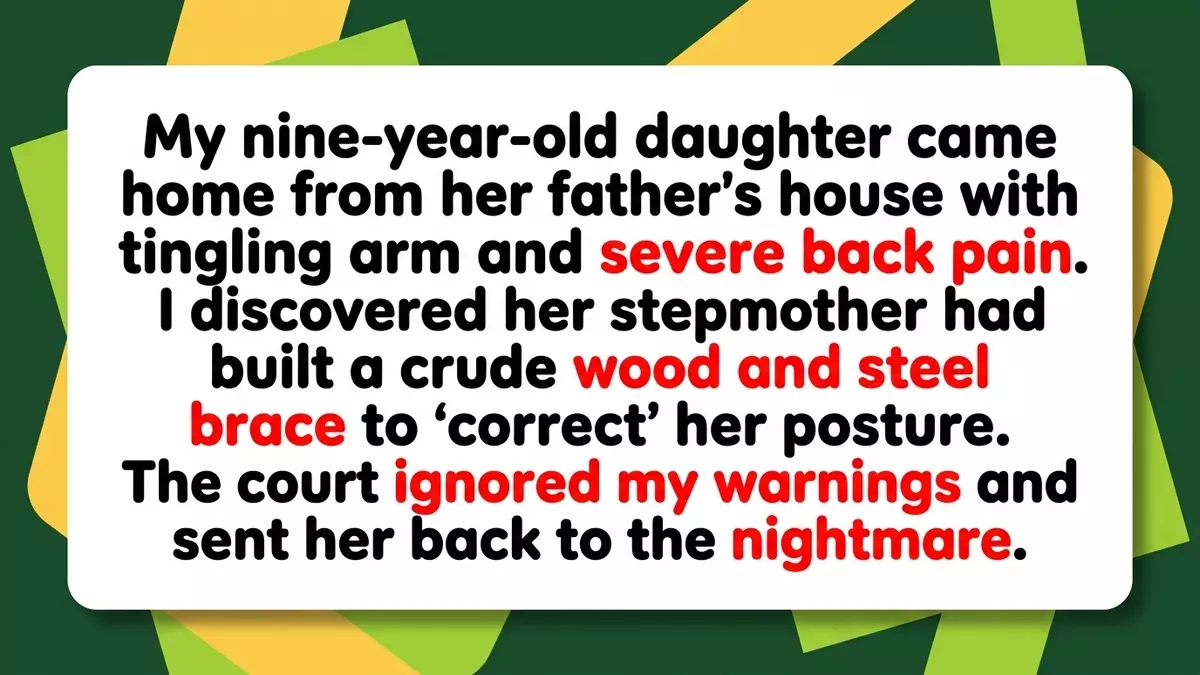
We all know that terrifying feeling when a child is in harm’s way and we cannot immediately reach them. For protective parents navigating complex custody arrangements, this universal nightmare can become a stark reality. When a nine-year-old child returns from a routine custody visit complaining of a tingling arm and acute back pain, typical playground soreness is rarely the assumption.
What unravels instead can sometimes be a chilling truth: a co-parent or step-parent taking it upon themselves to physically “correct” a child’s minor behavior or posture through highly restrictive, non-medical means. When caregivers fashion crude, homemade physical restraints under the guise of discipline, psychologists recognize this dynamic as an extreme, hazardous manifestation of coercive control.

Systemic Failures in Child Protection Coercive Control and the Power Asymmetry of Family Courts
The Physiology of Growth: The Extreme Risk of Non-Medical Restraints
To understand why unauthorized physical intervention is so dangerous, it is critical to look at the physiological and orthopedics-based realities of a child’s developing body.

Catastrophic Skeletal Risk
Forcing a growing child into an unyielding, rigid, or homemade device can cause irreversible damage to their skeletal system. Pediatric orthopedists emphasize that legitimate medical braces are carefully engineered instruments. They are mathematically calibrated to allow for natural development while target-correcting specific orthopedic issues.
[Homemade Wood/Steel Device] ──► [Excessive, Uncalibrated Pressure]
                                             │
      ┌──────────────────────────────────────┴──────────────────────────────────────┐
      ▼                                      ▼                                      ▼
[Joint Dislocations]               [Pinched Major Nerves]               [Restricted Blood Flow]
A makeshift device made of industrial wood, steel, or heavy straps lacks scientific calibration. It applies uneven, excessive force that can easily:
Dislocate delicate, growing joints.
Pinch major nerve pathways (causing the characteristic “tingling” or loss of sensation).
Restrict vital blood flow, leading to tissue damage.

The Escalation of Extreme Discipline
According to research published by medical and psychological health institutions, extreme physical disciplinary measures do not happen in a vacuum. They frequently escalate when an abusive caregiver feels their authority is being quietly questioned by the child. What begins as verbal berating or forced positioning can rapidly evolve into mechanical restraint as the perpetrator seeks absolute compliance.

The “Reunification at All Costs” Systemic Bias in Family Courts
One of the most agonizing aspects of protecting a child from domestic harm is navigating the bureaucratic and slow-moving family court system. When a court reinstates a parent’s unsupervised visitation after an incident of severe boundary-crossing or physical harm, it highlights a dangerous, recurring pattern.
The Pro-Se reunification Trap
Legal experts and clinical law professors specializing in domestic violence have long highlighted a systemic bias within family courts. The system frequently prioritizes parental rights and reunification over the immediate physical safety of the minor.
This “reunification at all costs” mentality can blind mediators, case workers, and judges to the escalating nature of domestic abuse. Consequently, children are sometimes returned to high-risk environments despite clear physical warning signs, simply to maintain a shared custody ideal.
The Power Asymmetry
A protective parent trying to secure emergency legal protection often faces an uphill battle. They must gather undeniable, forensic-level proof of harm while operating within a system that gives the accused the benefit of the doubt. This asymmetry leaves the protective parent fighting a dual battle: one against an abusive ex-spouse, and another against a slow-moving legal framework.
Practical Steps to Document Harm and Secure Emergency Protection
If you suspect your child is being subjected to unsafe physical discipline, restraint, or emotional abuse during custody visits, taking systematic, legally sound steps is vital.
1. Seek Immediate Medical Evaluation
Never delay a medical examination. If a child returns with physical complaints—such as tingling, bruising, or severe pain—take them straight to a pediatrician, emergency room, or a forensic medical examiner.
A physician’s official report provides the objective, scientific evidence required to trigger emergency court interventions.
Medical professionals are mandated reporters; their documentation carries immense weight in family court.
2. Meticulously Document Every Detail
Build a comprehensive, organized archive of evidence. Do not rely on memory alone during a high-stress legal battle.
Visual Proof: Take clear, high-resolution photographs of any physical injuries, bruises, or markings immediately.
The Child’s Voice: Write down the child’s exact words when they describe what happened, without leading or prompting them.
Timeline of Events: Maintain a detailed log of pickup and drop-off times, behavioral shifts, and physical symptoms.
3. File for an Emergency Protection Order
Work with a specialized family law attorney to file an immediate motion for an Emergency Order of Protection or a temporary suspension of visitation. Present the fresh medical documentation and photographic evidence to demonstrate an immediate threat to the child’s physical well-being. Request that any future visitation be strictly supervised by a licensed professional in a controlled facility.
Healing the Trauma of Broken Protection
The psychological trauma of being trapped in a restrictive environment or device designed by one’s own protectors can lead to lifelong anxiety, complex post-traumatic stress, and a profound distrust of authority figures. True healing requires long-term commitment.
A child’s resilience in escaping a harmful situation or blowing the whistle on abuse is extraordinary, but they should never have to be resilient alone. By implementing strict boundaries, securing professional psychological counseling, and demanding absolute accountability from the legal system, we can begin to transform family courts into spaces that place a child’s safety above all else.
Frequently Asked Questions
What should I do if my child tells me they are being physically restrained or hurt by a co-parent?
Believe them immediately and take action. Do not confront the co-parent directly, as this can lead to the destruction of evidence or retaliation against the child. Take your child straight to a pediatrician or an emergency medical facility to document the physical symptoms and report the situation to child protective services.
Can a parent face criminal charges for using a homemade restraint as discipline?
Yes. Using heavy, non-medical, or homemade physical restraints on a child crosses the line from disciplinary action into criminal child abuse, unlawful confinement, and reckless endangerment. These actions can result in immediate arrest, criminal prosecution, and the permanent termination of parental rights.
Why do family courts sometimes ignore a child’s complaints of abuse?
Family courts are heavily backed by a legal philosophy that emphasizes the importance of a child maintaining a relationship with both parents. Unfortunately, this can manifest as a systemic bias where judges or mediators view allegations of abuse as exaggerations stemming from a bitter custody battle, requiring an incredibly high threshold of forensic or medical proof to override the default joint-custody framework.
How can teachers or neighbors help a child trapped in an abusive household?
Teachers, neighbors, and school staff are critical components of the child protection safety net. If a child confides in you, or if you witness signs of physical restraint or extreme fear, document the interaction and file a report with local child protective services or law enforcement immediately. You can remain anonymous while providing life-saving intervention.
How do I help my child recover emotionally from severe domestic trauma?
Recovery requires a stable, predictable, and completely safe environment. Enroll your child in specialized trauma-informed pediatric therapy, such as Trauma-Focused Cognitive Behavioral Therapy (TF-CBT). Allow them to regain a sense of personal agency by giving them control over their daily choices, and reassure them constantly that they are safe and no longer trapped.