
Table of Contents
- 1. Understanding the Psychology behind Retroactive Jealousy
- 1.1. The Fear of the Unknown and Idealization
- 1.2. Retroactive Jealousy vs. Present-Day Insecurity
- 2. The Role of Trauma Compartmentalization and Human Growth
- 2.1. Why People Compartmentalize the Past
- 2.2. How Current Morals Are Forged
- 3. Practical Strategies to Overcome Retroactive Jealousy
- 3.1. 1. Identify and Track Your Triggers
- 3.2. 2. Stop the Interrogation Loop
- 3.3. 3. Focus on the Present Reality
- 4. Cultivating True Intimacy Through Radical Empathy
- 5. Frequently Asked Questions
- 5.1. Is it normal to feel retroactive jealousy?
- 5.2. Does retroactive jealousy mean I don’t trust my partner?
- 5.3. How do I know if my partner’s past behavior is a red flag?
- 5.4. What should I do if my partner keeps bringing up their exes?
- 5.5. Can therapy help with retroactive jealousy?
Retroactive Jealousy: Why We Obsess Over a Partner’s Past and How to Stop
We all know that moment when a casual, late-night conversation with a partner takes an unexpected turn. They mention an ex, share a story from their youth, or casually recall a past relationship dynamic. For many people, these details are easily processed and forgotten. But for others, a partner’s romantic or intimate history triggers a sudden, suffocating wave of anxiety, resentment, and obsessive questioning.
In psychology, this phenomenon is known as retroactive jealousy. Unlike ordinary jealousy, which responds to an active, present-day threat, retroactive jealousy fixates entirely on the past—uncovering a painful disconnect between the person you love today and the life they lived before you arrived.
When left unchecked, this emotional loop can sabotage an otherwise healthy relationship. Understanding the psychological roots of this behavior is the first step toward breaking the cycle and building true intimacy.

Retroactive Jealousy Why We Obsess Over a Partner’s Past and How to Stop

Understanding the Psychology behind Retroactive Jealousy
To overcome the urge to fixate on a partner’s past, it is essential to look beneath the surface. Retroactive jealousy is rarely about what your partner actually did; instead, it is a reflection of internal conflicts, fears, and cognitive habits.
The Fear of the Unknown and Idealization
At the beginning of a relationship, we often construct an idealized image of our partner. We view them through the lens of our current shared values, boundaries, and mutual respect. When a story from their past disrupts this narrative, it creates cognitive dissonance—a psychological discomfort that arises from holding two conflicting beliefs at the same time.
The mind struggles to reconcile the principled, mature person sitting in front of us with the younger, perhaps more impulsive or vulnerable version of them from years ago. This gap in understanding breeds anxiety, prompting a desperate desire to know every single detail in an attempt to regain control.

Retroactive Jealousy vs. Present-Day Insecurity
Standard jealousy usually acts as a warning system for a current threat—like a partner flirting with someone else at a party. Retroactive jealousy, however, functions as a time machine. The events in question are completely over, yet the emotional response feels incredibly urgent.
Psychologists suggest that this fixation often stems from deep-seated personal insecurities, a fear of abandonment, or a subconscious belief that we are constantly being compared to those who came before us.
The Role of Trauma Compartmentalization and Human Growth
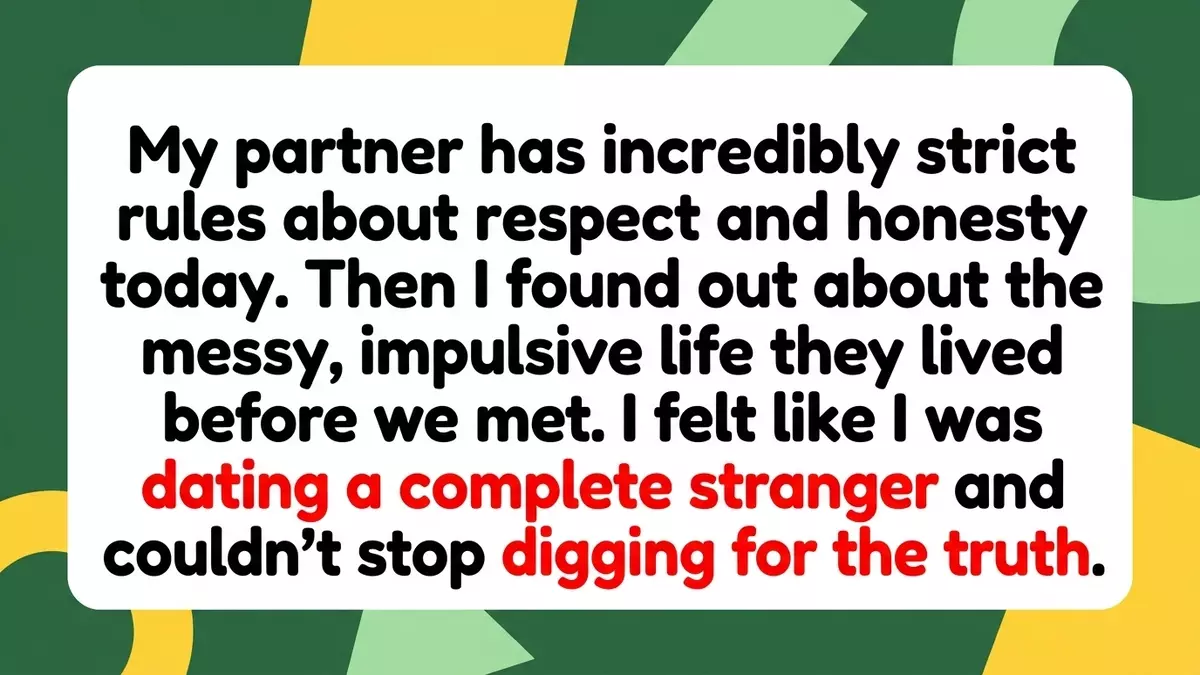
One of the biggest catalysts for retroactive jealousy is a perceived “double standard” in a partner’s behavior. For instance, a partner might hold strict, uncompromising boundaries regarding mutual respect and communication today, yet reveal a past where they allowed those exact boundaries to be crossed.

To an outside observer, this can look like hypocrisy. In reality, it is a textbook demonstration of human growth and psychological survival.
[Past Experiences / Crossed Boundaries]
                 │
                 ▼
 [Trauma Compartmentalization (Defense)]
                 │
                 ▼
[Development of Strict Present-Day Morals]
Why People Compartmentalize the Past
When individuals experience confusing, unbalanced, or painful relationship dynamics in their youth, they often lack the emotional maturity to process the situation at the time. To protect their mental well-being and maintain a sense of personal agency, the brain utilizes compartmentalization.
They put the memory in a mental box, minimizing its impact or framing it with detached neutrality so they can keep moving forward. Acknowledging the painful reality of a past situation requires a level of vulnerability that a person might not be ready to confront.
How Current Morals Are Forged
Human maturity is rarely a straight, unbroken line. The fiercely protective, highly principled standards your partner holds today did not appear out of thin air; they were likely forged in the messy, confusing realities of their past.
Key Takeaway: A partner’s current strict boundaries are often a direct shield developed because their boundaries were crossed when they were younger. Instead of viewing their history as a contradiction, it should be recognized as the very catalyst that shaped them into the resilient person you fell in love with.
Practical Strategies to Overcome Retroactive Jealousy
If you find yourself trapped in a loop of intrusive thoughts regarding your partner’s history, breaking the cycle requires conscious effort, self-compassion, and open communication.
1. Identify and Track Your Triggers
Pay close attention to when these obsessive thoughts arise. Do they surface when you are feeling stressed, lonely, or insecure about your career? Often, retroactive jealousy acts as a magnet for unrelated anxieties. Recognizing that your discomfort is an internal emotional state—rather than a real problem within your current relationship—is crucial.
2. Stop the Interrogation Loop
The most damaging habit associated with retroactive jealousy is the urge to ask endless, highly specific questions about a partner’s past. While it feels like gathering information will bring peace of mind, it actually achieves the opposite. Every new detail provides the brain with more fuel for painful mental movies. Draw a firm boundary with yourself to stop seeking reassurance through interrogation.
3. Focus on the Present Reality
Ground yourself in the tangible facts of your current dynamic. Ask yourself:
Is my partner loyal, loving, and respectful to me right now?
Are our current values aligned?
Am I treating them based on who they are today, or who they were years ago?
Dating someone in the present tense allows for a balanced, healthy relationship dynamic built on real-time experiences, rather than ghosts from the past.
Cultivating True Intimacy Through Radical Empathy
Moving past retroactive jealousy requires a profound shift from judgment to radical empathy. True intimacy means accepting a partner’s entire journey, including the chapters written before you met.
Instead of pressuring a partner to re-evaluate their past or forcing them to confront memories they aren’t ready to process, focus on creating a safe, supportive space. When a partner feels entirely safe from judgment, the need for defense mechanisms naturally decreases, paving the way for deeper, more authentic communication.
Frequently Asked Questions
Is it normal to feel retroactive jealousy?
Yes, experiencing curiosity or a slight pang of discomfort regarding a partner’s past is a very common human reaction. However, it becomes unhealthy when it transforms into obsessive thinking, constant questioning, or an urge to punish your partner for events that occurred before your relationship began.
Does retroactive jealousy mean I don’t trust my partner?
Not necessarily. Trust is about believing your partner will be faithful and honest with you in the present. Retroactive jealousy is usually rooted in personal insecurity, a fear of comparison, or a rigid idealization of who your partner should be, rather than a lack of trust in their current loyalty.
How do I know if my partner’s past behavior is a red flag?
Look at patterns of behavior. If a partner’s past involves a consistent history of deceit, manipulation, or crossing boundaries that continues into the present, that is a legitimate concern. However, if the past involves isolated mistakes, vulnerabilities, or situations from their youth that they have clearly outgrown, it is generally a sign of personal evolution, not a red flag.
What should I do if my partner keeps bringing up their exes?
If your partner frequently mentions their past relationships in a way that makes you feel uncomfortable or compared, it is important to communicate this clearly. Establish a gentle, respectful boundary by explaining that while you accept their past, you want to focus your energy on building your unique connection in the present.
Can therapy help with retroactive jealousy?
Absolutely. Cognitive Behavioral Therapy (CBT) is highly effective at helping individuals recognize, challenge, and break the cycle of obsessive, intrusive thoughts. A professional counselor can help you uncover the underlying root causes of your insecurity without causing secondary stress or arguments within your relationship.