
Table of Contents
**Man Refuses to Buy House With Girlfriend Over ‘Pay Everything’ Demand**
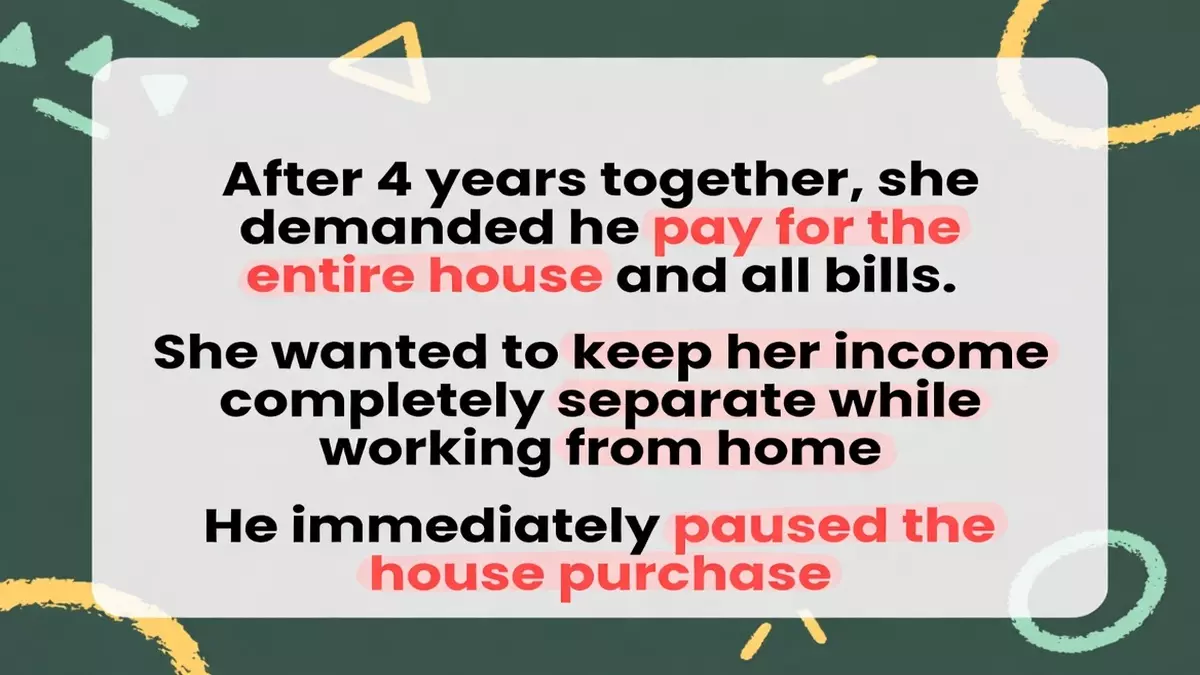
A man in a four-year relationship is reconsidering their future after his girlfriend insisted he cover all costs for a new home. She argued her at-home job and responsibilities for her children meant she would keep her income separate, while he handled the mortgage, bills, and every shared expense. This major financial mismatch has him pumping the brakes on house hunting and questioning their long-term compatibility.
Buying a home together marks a significant milestone in any relationship. When expectations around money clash so dramatically, it often reveals deeper differences in values that can make or break a couple’s plans for the future.
Man Refuses to Buy House With Girlfriend Over ‘Pay Everything’ Demand
### How Four Years Together Led to This Financial Showdown
The couple had built a seemingly solid foundation over four years. They talked about moving forward, including the exciting possibility of purchasing a house. House hunting felt like the natural progression until detailed conversations about finances surfaced.
The girlfriend proposed a traditional setup: he would pay the full mortgage, utilities, maintenance, and all household costs. Her income would remain entirely her own, primarily to support her children. She viewed her at-home work as sufficient contribution, framing his financial role as a sign of commitment and care rooted in her cultural background.
For the boyfriend, this arrangement felt overwhelmingly one-sided. In today’s economy, where housing prices continue to climb, relying on a single income for a major purchase adds significant pressure and risk. He envisions a true partnership where both contribute proportionally, making the revelation a major wake-up call.
This type of surprise after several years together is more common than many realize. Couples often avoid deep money talks during the honeymoon phase, only to face them when big commitments arise.
### The Clash Between Traditional Roles and Modern Realities
The girlfriend’s expectations align with longstanding cultural norms in which men act as primary providers. In her view, a partner who shoulders financial responsibility demonstrates love, stability, and dedication. This perspective offers her a sense of security, especially while managing responsibilities for her children.
The boyfriend approaches the situation pragmatically. He sees dual-income households as essential for financial resilience in the current economic climate. Single-handedly funding a home while she retains full control of her earnings feels unfair and unsustainable, particularly with the added complexities of blended family finances.
Financial therapists frequently encounter these dynamics. Money disagreements rarely come down to simple math — they connect to early life experiences, family models, and personal beliefs about worth, safety, and partnership. When one person expects full provision and the other seeks equality, resentment can grow quickly if left unaddressed.
### Why This Financial Incompatibility Matters So Much
Purchasing property together creates legal and financial ties that extend far beyond romance. Mortgages, titles, taxes, and ongoing expenses require clear agreements. Entering such a commitment with unequal contributions and no shared plan often leads to future conflict, especially if the relationship faces job loss, health issues, or breakup.
Her desire to ring-fence income for her children is understandable as a protective parent. However, in a shared household, this setup risks creating imbalance. The boyfriend would bear the full burden of housing costs while she maintains financial independence, potentially leading to feelings of being used or taken advantage of over time.
Experts recommend pausing major decisions like house buying when core incompatibilities emerge. This gives both partners space to explore their visions without immediate pressure. Open, non-judgmental conversations about long-term goals, fears, and expectations around money become essential.
### Practical Steps Couples Should Take Before House Hunting
Anyone considering buying a home with a partner should prioritize these actions:
– **Full Financial Transparency**: Share credit reports, income details, debts, assets, and spending habits early.
– **Create a Joint Budget**: Test how shared expenses might work using real numbers before committing.
– **Discuss Contribution Models**: Explore proportional splits based on income, equal shares, or hybrid approaches that feel fair to both.
– **Consider Legal Protections**: Draft a cohabitation agreement outlining ownership percentages, responsibilities, and exit plans.
– **Account for Children and Blended Families**: Clearly separate child-related costs from household expenses.
– **Evaluate Non-Financial Contributions**: Value at-home work fairly, but ensure overall equity in the partnership.
– **Seek Professional Guidance**: Consult financial advisors, mortgage brokers, and relationship counselors.
Delaying the purchase, as the boyfriend is doing, protects both parties from potential regret or financial hardship.
### Community Reactions and Broader Conversations
Online discussions, particularly on Reddit, have been nearly unanimous in supporting the boyfriend’s hesitation. Many commenters wonder why such a fundamental mismatch took four years to emerge, viewing it as a significant red flag. While some acknowledge the complexities of her role with children and at-home work, most agree that demanding one partner pay everything rarely leads to healthy, balanced relationships.
These conversations reflect wider societal shifts. Traditional gender roles still resonate for some, but economic realities — dual incomes being necessary for homeownership in many areas — push couples toward more egalitarian models. Financial incompatibility consistently ranks high among reasons relationships end, especially around major milestones.
### The Emotional and Cultural Layers at Play
 Husband’s Secret Men’s Club Ignites Major Marriage Fight
 Blended Family Crisis: Bride Pauses Wedding After Stepson/Stepdaughter’s Secret Sabotage Plan Is Exposed
For the girlfriend, her stance may stem from deeply ingrained beliefs about security and partnership. Cultural upbringing can make traditional provider roles feel natural and loving. Challenging those beliefs can feel threatening or unloving.
For the boyfriend, the proposal creates practical stress and questions about fairness. He may worry about being trapped in a provider role with limited input on finances or decisions. These emotional scripts around money often trace back to childhood observations of parental dynamics.
Relationship experts stress the importance of curiosity over conversion. Instead of trying to change the other person’s core values, couples should explore whether their visions can realistically align. If not, it may be kinder to part ways before deeper entanglements like shared property or marriage.
### Long-Term Implications for the Relationship
This disagreement forces important questions: Can they find a middle ground that respects both perspectives? Is one person willing to adjust their expectations significantly? Or is this a sign of irreconcilable differences in how they define partnership?
Many couples successfully navigate similar challenges through compromise, such as her contributing a set percentage or non-financial value being formally recognized in agreements. Others realize the mismatch runs too deep and choose to maintain separate finances and living situations longer.
In an economy where homeownership is increasingly challenging, flexibility and teamwork around money strengthen relationships. Rigid expectations, whether traditional or otherwise, can create unnecessary strain.
### Lessons for Anyone Navigating Finances in Relationships
This story offers valuable takeaways for couples at any stage:
– Discuss money early and often, especially before big commitments.
– Recognize that cultural and personal backgrounds shape financial views.
– Prioritize fairness and mutual respect over traditional assumptions.
– Value both financial and non-financial contributions realistically.
– Be willing to seek neutral third-party guidance when stuck.
Protecting your financial well-being isn’t selfish — it’s essential for building a secure shared life. A healthy partnership enhances both partners’ stability rather than placing disproportionate burden on one.
### Conclusion: When to Pause and Reassess Major Steps
The boyfriend’s decision to hit pause on buying a house together reflects wise caution after discovering such a significant financial mismatch. His girlfriend’s demand that he pay for everything, while keeping her income separate, highlights a core clash between traditional expectations and modern economic realities.
Four years is a substantial investment in a relationship, yet this revelation shows how important it is to align on practical matters before merging lives and assets. Whether they find a workable compromise through honest dialogue or decide the differences are too great, addressing the issue now prevents greater pain later.
Ultimately, successful relationships require both emotional connection and practical compatibility. By facing financial truths head-on, couples give themselves the best chance at building a future that feels secure and fair for everyone involved. If you’re facing similar conversations, approach them with openness and remember that clarity now leads to stronger decisions ahead.
### FAQ
**1. Is it fair for one partner to pay all house-related expenses?**
It can work in some relationships if both fully agree and the numbers support it long-term. Most financial experts recommend shared contributions for better balance and reduced resentment.
**2. How soon should couples discuss finances before buying a house?**
Ideally within the first year of dating, and definitely in detail before house hunting. Transparency prevents surprises like this one.
**3. Can cultural differences in gender roles be reconciled?**
Yes, with mutual respect and compromise. Success depends on both partners feeling valued and secure in the agreed arrangement.
**4. What should you do if your partner refuses to contribute financially?**
Have calm, specific conversations about expectations. If no middle ground emerges, consider whether the relationship aligns with your long-term needs.
**5. How do children from previous relationships affect joint finances?**
They require clear boundaries. Child-related costs should be separated, while household expenses are shared fairly. Legal agreements help clarify responsibilities.
**6. Should you buy a house with someone if finances aren’t aligned?**
Generally no. Major purchases amplify any existing mismatches and can lead to legal and emotional complications if the relationship ends.
**7. What are healthy ways to split expenses in a relationship?**
Common models include 50/50 splits, proportional to income, or assigning specific bills. The best approach is the one both partners view as equitable after open discussion.
This situation serves as a powerful reminder that love and shared dreams must be supported by practical alignment. By prioritizing honest financial conversations, couples can build homes — and relationships — on stronger, more sustainable foundations.