
Table of Contents
**Louder Gym Music Doesn’t Mean Better Workouts, Study Finds**
For years, many fitness studios have operated under the belief that louder music equals better workouts. The thumping bass and high volume are supposed to push people harder, increase motivation, and create an energizing atmosphere. However, a new study from Los Angeles challenges this long-held assumption.
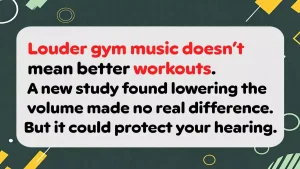
Researchers discovered that lowering the music volume in group fitness classes did not reduce how hard participants felt they were working. At the same time, the quieter environment could help protect hearing health over time.
Louder Gym Music Doesn’t Mean Better Workouts, Study Finds
### What the USC Study Revealed About Workout Music
The research, led by specialists at the University of Southern California (USC) and published in *JAMA Otolaryngology–Head & Neck Surgery*, involved 189 people attending group weight-training classes at a Los Angeles fitness studio. Participants completed 239 surveys after one-hour sessions that featured music throughout.
In the louder classes, the average sound level measured 91.4 decibels (dBA). In the quieter sessions, the volume dropped to 88.5 dBA — a noticeable but not drastic reduction. After each class, participants rated their perceived exertion using the Borg CR-10 scale, a standard tool for measuring how intense exercise feels subjectively.
The key finding: the quieter classes were not inferior. The difference in perceived exertion between loud and quieter sessions was only about 0.66 points on the Borg scale. The researchers concluded that lowering the volume “did not lead to meaningful reductions in perceived exertion.”
This challenges the common gym philosophy that louder music drives better performance. Many instructors and participants assume the high volume creates necessary energy and intensity. According to this data, the body may not actually need that extra noise to maintain effort levels.
### Why Volume May Not Matter as Much as We Thought
Music has well-documented benefits during exercise. It can improve mood, provide distraction from discomfort, increase motivation, and even make workouts feel easier. However, this study suggests that cranking up the volume past a certain point brings diminishing returns — and added risks.
The small difference in perceived effort indicates that rhythm, beat, and personal enjoyment of the music matter more than sheer loudness. A strong, motivating playlist at a moderate volume can still deliver the psychological benefits without overwhelming the ears.
This finding is particularly relevant for group fitness classes, where music volume has steadily increased over the years. Many studios treat loud sound almost like another piece of equipment. The new research shows that a more moderate approach may work just as well for most people.
### The Hidden Risk: Hearing Damage from Loud Gym Classes
One of the most concerning results from the study involved hearing symptoms. 28 participants (14.8%) reported experiencing ringing in their ears after class at least once. Only four people (2.1%) said they regularly used hearing protection.
Ringing, buzzing, or muffled hearing after loud noise exposure can signal temporary or permanent damage. The National Institute on Deafness and Other Communication Disorders notes that repeated exposure to sounds above 85 dBA increases the risk of noise-induced hearing loss and tinnitus.
NIOSH (National Institute for Occupational Safety and Health) recommends limiting exposure to 85 dBA over an eight-hour period. In loud fitness classes that regularly hit 90+ dBA, the safe exposure time drops significantly. For regular attendees who take multiple classes per week, the cumulative effect on hearing can become serious over months and years.
### Practical Steps for Gym-Goers
You don’t have to give up group fitness classes or energetic music to protect your hearing. Here are simple, effective strategies:
– **Position yourself wisely**: Stand farther from speakers when possible. Sound levels drop noticeably with distance.
– **Use high-fidelity earplugs**: These reduce volume while preserving sound quality and allowing you to hear the instructor. Many options are designed specifically for concerts and fitness classes.
– **Monitor how your ears feel**: Ringing, pressure, or muffled hearing after class is a warning sign. Take it seriously and consider speaking with an audiologist if symptoms persist.
– **Choose volume thoughtfully**: Support studios that maintain reasonable sound levels. Your feedback as a customer can influence class policies.
– **Balance with recovery**: Give your ears rest days between very loud sessions, just as you rest muscles.
### What This Means for Fitness Studios and Instructors
For gym owners and instructors, the study offers a practical path forward. Lowering music volume slightly can protect clients’ long-term hearing health while maintaining the energy and motivation that make classes successful. Many participants may not even notice the difference in workout intensity.
 Brother Refuses Spare Key to Chaotic Sister, Dividing the Family
 Boyfriend Bans Solo Movie, Woman Spots Controlling Red Flag
Studios could consider:
– Setting maximum volume guidelines based on health recommendations
– Investing in better sound distribution so volume doesn’t need to be as high
– Educating instructors and members about hearing protection
– Offering “lower volume” class options for those who prefer it
The goal isn’t to remove music — it’s to use it more intelligently. Music still enhances workouts through rhythm, mood, and motivation. The volume level, however, appears less critical than previously assumed.
### The Bigger Picture: Exercise Enjoyment vs. Health Risks
This research highlights an important tension in modern fitness culture. High-energy environments with loud music can feel exciting and motivating in the moment. However, they may come with hidden costs to hearing health that only show up years later.
Many people already deal with noise exposure from commuting, concerts, headphones, and urban living. Adding regular loud gym sessions can push cumulative exposure into risky territory. Finding a balance that preserves workout enjoyment while protecting long-term health is increasingly important.
### Tempo and Music Choice Still Matter
While volume may be less important, other elements of music selection remain valuable. Research consistently shows that songs with the right tempo can help people maintain pace during cardio or strength training. Upbeat, enjoyable tracks can make tough workouts more bearable.
The key takeaway is quality over intensity. A well-curated playlist at a reasonable volume can deliver strong psychological benefits without the potential harm of excessive loudness.
### Final Thoughts: Better Workouts Don’t Require Ear Damage
This USC study provides welcome news for fitness enthusiasts. You can likely maintain high workout intensity and motivation with noticeably quieter music. The small reduction in volume that was tested did not meaningfully impact perceived effort, but it could make a meaningful difference for hearing protection over time.
A great workout should challenge your muscles and cardiovascular system — not your ears. By becoming more mindful of sound levels, both individuals and studios can create healthier fitness environments that support long-term wellbeing.
The next time you’re in a loud class and feel that familiar ringing afterward, remember this research. A slightly quieter playlist might give you the same results with better protection for your future self.
## FAQ
**1. Does louder music actually make workouts more effective?**
According to this study, no. Lowering the volume did not lead to meaningful reductions in perceived exertion during group weight-training classes.
**2. At what volume level does music become risky for hearing?**
Sounds above 85 dBA for extended periods increase the risk of hearing damage. Many fitness classes exceed this level.
**3. What should I do if my ears ring after a workout class?**
Treat it as a warning sign. Consider using earplugs in future classes and monitor symptoms. Persistent ringing should be checked by a doctor or audiologist.
**4. Can I still enjoy music during workouts with lower volume?**
Yes. Music’s motivational benefits come more from rhythm, enjoyment, and beat than from sheer loudness.
**5. Should gyms lower their music volume?**
The evidence suggests yes. A modest reduction can protect hearing without reducing workout quality for most people.
**6. Are earplugs effective in fitness classes?**
High-fidelity earplugs can significantly reduce volume while still allowing you to hear music and instructions clearly.
**7. Will this change how group fitness classes operate?**
It could. Studios that prioritize member health may adopt lower volume policies or offer varied sound level options.
This study adds important nuance to how we think about music in fitness. Great workouts come from effort, good programming, and motivation — not necessarily from maximum volume. Protecting your hearing while staying active is a smart long-term strategy for sustainable fitness.